

Discontent, the story of the public comment session
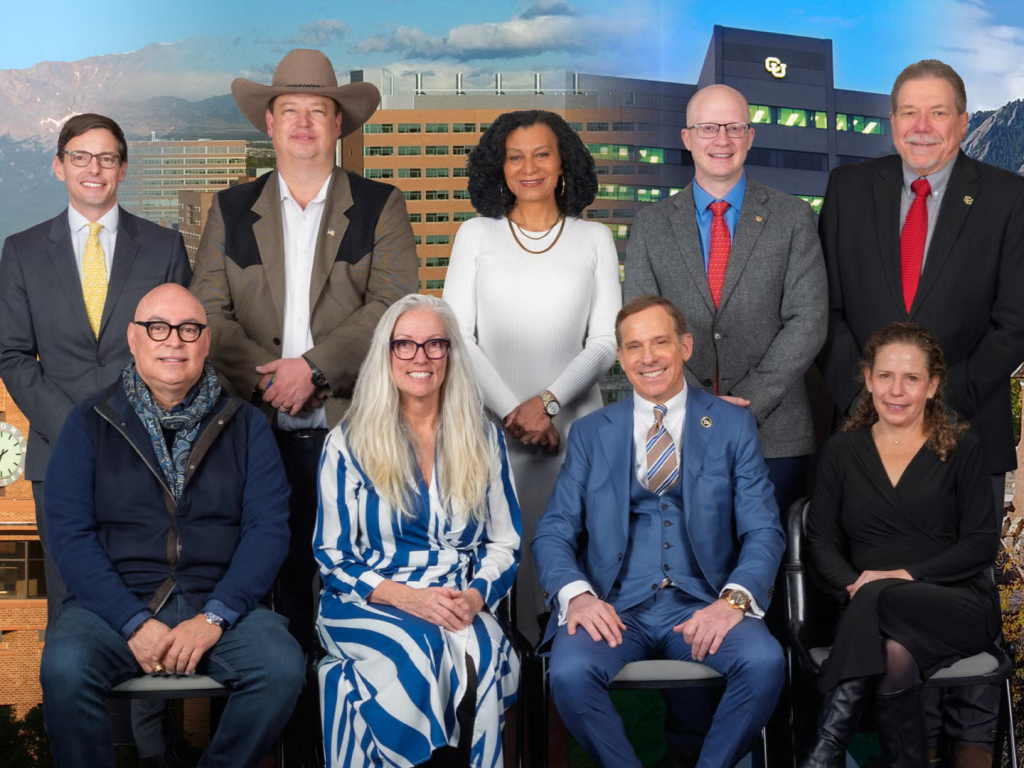
April 10th saw the University of Colorado Board of Regents meet at CU Denver, but off the table of discussion were two topics which, under the guise of legal reasons, had been forbidden. It wasn’t made clear to those in the room that day what those topics were, just that the Regents’ were not going to respond to comments related to them.
After a ten minute break that verged on fifteen, the Regents reluctantly assembled for the public comment portion of their meeting. The room was crowded with those representing the United Campus Workers, pro-Palestine student activists, and many prominent members of the black community in Colorado. They extended the 20 minutes allotted for public comment to well over an hour so that everyone could speak, but it is unlikely that everyone was truly listened to, as a Boulder SJP member who attended and spoke at the event expressed they felt that “every speech went in one ear and out the other.”
The Regents responded to none of the commenters and the only engagement was from Regent Ken Montera, who was eager to ask each speaker to stop promptly when they’d reached the end of their two minutes.
Soon enough, it became clear what one of the forbidden topics was, as speaker after speaker came forward to denounce the Board of Regents for their attempt to censure Wanda James as racist targeting of the only black member of the board. Regent James became involved in a controversy surrounding her criticism of materials used by the Tea on THC program, an awareness campaign launched by the Colorado School of Public Health in December 2024 following a literature review of over 60,000 articles on the effects of high-THC products.

Regent James described the imagery used in a slideshow attempting to discourage marijuana use by pregnant women was described as not merely “racially insensitive” but fully “racist,” as cartoon drawings of a black fetus, a black child, and a black teenager were used, sending a clear message either out of malice or ignorance. With the context of the U.S.’s racialized policy during the war on drugs and disproportionate incarceration of black Americans on drug offenses, this imagery is rightly condemned, the images were removed, and the Dean of the School of Public Health as well as a company partnering with the Tea on THC program issued apologies. James also questioned the science of the claims made by the slideshow, which linked higher risk of other substance abuse and poorer academic performance. Tea on THC admits that their research is incomplete, but still put these association claims out as part of their information campaign.
While this incident was seemingly resolved, the chair of the Board of Regents, Callie Rennison, and vice chair, Ken Montera, initiated an investigation of James, which could result in a censure from the board. This is amidst investigation into Regent Rennison’s own scandal over her allegedly receiving full-time pay for part-time work. Many members of the broader black community—including Denver’s first black mayor, Wellington Webb—, friends of James, and her husband, Scott Durrah, came forward and denounced this targeting of the only black member of the Board. Public comment finished with Wanda James herself having signed up. She spoke from the same podium her constituents and asked for the resignation of Rennison as chair.
United Campus Workers were also present throughout the public comment portion of the meeting, giving their petitions to the Board and demanding better compensation on all University of Colorado campuses. Underprotected workers were given voice by several speakers, describing food pantries set up by faculty to help their colleagues eat and the exploitation of professional research assistants at Anschutz. A representative from the CU Housstaff Association United also came to demand full recognition of their organization with complete collective bargaining rights. United, all these speakers demanded the university provide what is only just, cost of living increases so that its employees of all job descriptions can live comfortably in the state in which they work and greater respect for campus workers.
Pro-Palestine activists also made their voices heard in the public portion of the meeting, continuing to demand sanctuary campus policies be implemented at CU and divestment from Israeli apartheid, occupation, and genocide. Security at the event was high, as though the university expected it would have to respond to protesters violently, but the students joined UCW members anyway to stand peacefully in support of their speakers and those of the other aligned interests present. They left chanting that Palestine will one day be free; the police, unable to intervene, watched idly from their column of parked motorcycles across the street.
“I thought it was productive, getting a group together to get our voices out to some prominent individuals in the Denver-Boulder community with some other groups from other campuses,” said one student activist interviewed. More than that, we believe that the environment in that room was encouraging. We saw that when we come together to speak on behalf of our various organizations, we find that we agree on the injustices at hand. We found that, no matter which community we came from, we agree loudly that CU is failing us… all of us. So, even if the CU Board of Regents proceeds as it can be expected to proceed—by doing nothing at all to address the failures of this university system and societal assaults on human rights and dignity—we know that we have allies in this struggle. City to city, interest to interest, community to community, all of us are connected and the way forward is solidarity.
 El Diario de la Gente
Leave a comment