
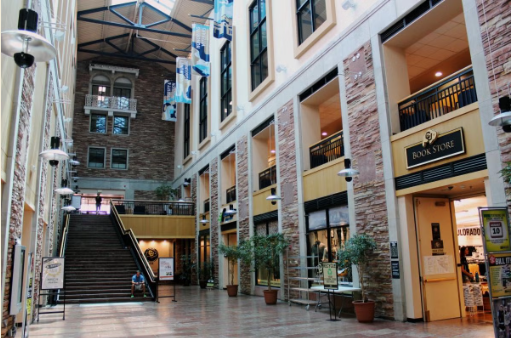
To any closeted homies worried about their explicit photos being leaked by that guy they probably shouldn’t have given their mom’s Facebook friend list to… fear not: Montez Butts, director of the University Memorial Center, already knows how big your penis is.
Without telling anyone, the UMC has installed 100 million dollar—or however much this kind of thing costs—TSA-style body scanning technology to prevent terrorism from occurring in the UMC. With several career fairs disrupted by terrorist agitators seeking war industry contractors’ removal from the university campus, CU has decided to heighten security to maintain longstanding partnerships with companies such as Lockheed Martin.
Our reporters tested the new security system. One of the UMC security guards let us have security camera access during their shift in exchange for a few cans of Zyns, and we fiddled with the angles and image software, which was admittedly impressive. Not only can stomach contents be discerned, but the x-ray machines somehow are able to take layered images that one can scroll through to gradually strip unsuspecting CU Boulder students. All images taken of those entering the UMC are also stored for later use were investigations to need them. We also have reason to suspect that these images are being sold to fund the security system itself as there is simply no way the university has this sort of money lying around.
Additionally, in other updates regarding UMC construction, Starbucks will not be returning to its on campus location. We immediately contacted some terrorists in Boulder SJP’s “Terrorism Brigade” to inquire about their involvement on this matter: they claimed victory and insisted that “inshallah, a cooperative coffee shop ethically sourcing their ingredients will succeed [Starbucks].” Starbucks may, however, consider opening a second location on College Ave, as our sources give the Walgreens on the Hill a few months yet to live following the retail chain’s acquisition by private equity, known for its “pump and dump” treatment of their assets.
 El Diario de la Gente
Leave a comment